It’s Dyslexia Awareness Month. If your child has dyslexia, or you think they might, small changes in class can take the strain off reading, writing and memory. That leaves more energy for the learning itself, so they can show what they really know.
These are the adjustments I’d suggest asking about, grouped into three areas, and how to ask for them.
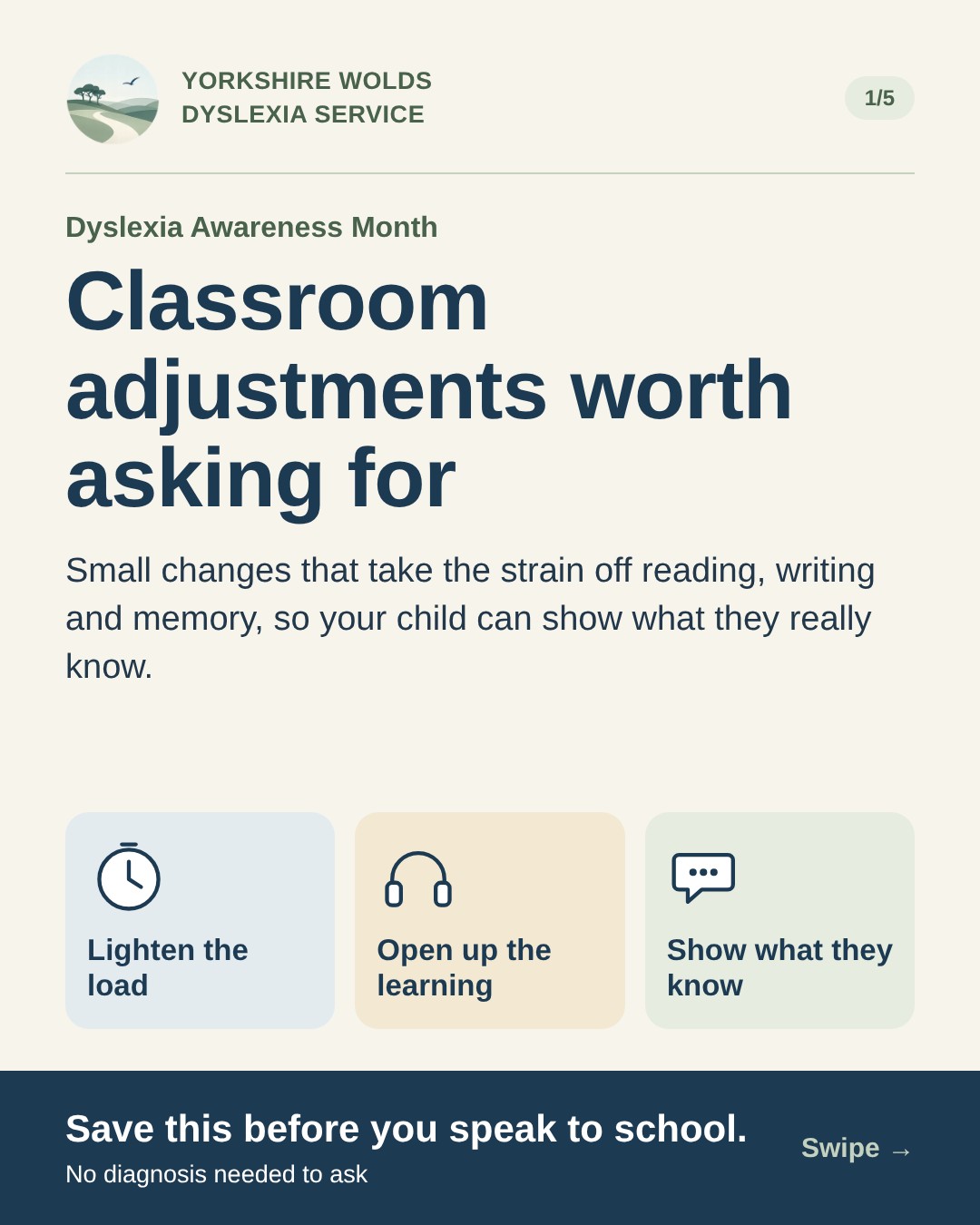
1. Lighten the load
Copying, remembering and rushing use up energy that should go on learning. These changes take some of that weight off:
- Less copying from the board. Copying means holding words in memory while looking up and down, which is hard work for many dyslexic children.
- Printed or shared notes, including homework tasks, so nothing important depends on what was copied down in a hurry.
- One step at a time. Instructions said and written down, rather than a long list given out loud.
- Time to think. Extra time to read, process and answer.
Less strain, same learning. Small changes add up over a school day.
2. Open up the learning
Reading shouldn’t be the only way into a lesson.
- Key words shared early, before the topic starts, so new vocabulary isn’t met for the first time in the middle of a lesson.
- Listening as well as reading: text read aloud, audiobooks or text-to-speech.
- Clear, uncluttered pages, with a plain font, bigger text and room to breathe.
- Pictures and mind maps alongside the words.
Lower the barrier, not the bar. The thinking stays just as demanding.
3. Let them show what they know
What your child knows matters more than how neatly it is written down.
- Answering out loud, or talking ideas through before writing.
- Typing or dictating, using a laptop or speech-to-text.
- Marking the ideas, not just the spelling.
- A reader or scribe in tests, where this is allowed.
Judge the learning, not the writing.
How to ask
Adjustments don’t lower expectations. They let your child’s ability show, instead of their dyslexia. Same work, same high hopes, fewer barriers.
- Talk to the class teacher or SENDCo. You don’t need a diagnosis to ask. Describe what you see at home and what seems to help.
- Agree which changes to try, and who will make them. A short list that actually happens is better than a long one that doesn’t.
- Set a date to review. Keep what helps, and change what doesn’t.
It can help to save this page, or the list above, before you speak to school.
Why these changes help
Dyslexia often affects working memory and how quickly words are processed, not just reading and spelling. You can read more about these barriers, and why adjustments make a difference, on my Understanding dyslexia page.
If you’d like help working out which adjustments would suit your child, a free consultation call gives us a chance to talk it through. I offer individual reading and spelling support for families in Pocklington and the surrounding areas.