Parent resources
Evidence, tools and useful links
Learning at home
Five ways to support your child’s learning at home
If your child is dyslexic, you may find yourself acting as teacher and specialist as well as parent. If that feels hard, you are far from alone: in a 2019 survey for the All-Party Parliamentary Group for Dyslexia and other SpLDs, 95% of parents and carers said they lacked the skills and knowledge to support their dyslexic child.
These five ideas come from Karen Mace, Head of Assessment, Education and Training at the British Dyslexia Association, writing for BBC Bitesize. Here they are in our words.

1. Build a routine
Routine matters for every child, and even more for a child with dyslexia. A visual timetable for each day, using the same pictures and colours every time, shows your child what is coming. Plan where each activity will happen too: at the table, on the floor or outside.

2. Choose what to learn
Find out where your child is working now, and aim for work that stretches them without being out of reach. They may be at different stages in different subjects, and may show what they know better out loud than on paper. Build in their interests and strengths to keep motivation high.

3. Make it multisensory
Use more than one sense at a time: seeing, hearing, moving and touching. Reading along with an audiobook uses sight and hearing together. For letter work, try laying out an alphabet arc, singing the alphabet while touching each letter, or forming letters in sand or shaving foam.

4. Use technology
Text to speech, speech to text and good spelling and grammar checkers are built into most computers, tablets and phones. Touch typing pays off at school and beyond, and BBC Dance Mat Typing is a free place to start. Audiobooks can open up a love of stories for children who find reading hard.

5. Don’t overload your child
Learning one to one is far more intense than a normal school day, and dyslexic learners tire more quickly. A short spell of good-quality learning each day is worth much more than trying to fill six hours.
Assistive technology
Software, hardware or devices that support independence and productivity, and can be crucial support in the classroom or at home.
- Reading pens / scanners
- Text-to-speech software
- Speech-to-text software
- Touch typing
- Recording devices
Study skills
Simple tools that make ideas visible and memorable: alternatives to writing everything down.
- Highlighters & coloured pens
- Post-it notes
- Mind maps
- Flashcards
- Alternative ways of recording ideas
From the toolkit
Recording ideas and building vocabulary
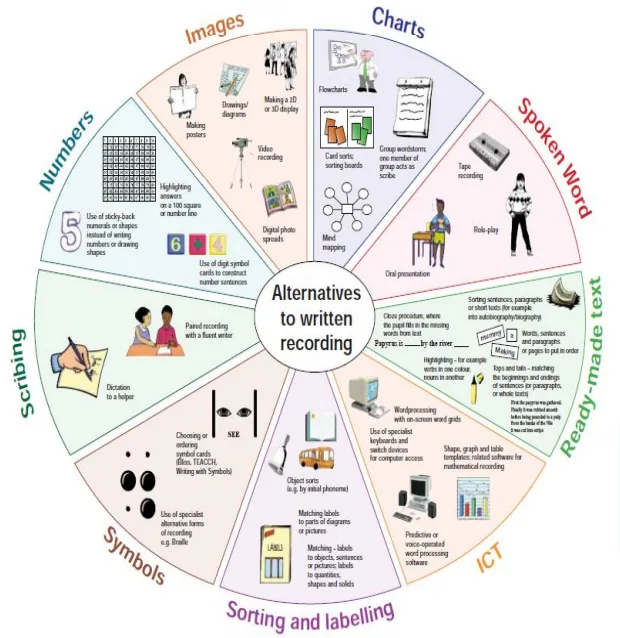
There are many ways to record ideas and show learning that don't rely on writing everything down. These visual tools can transform how a learner plans, remembers and expresses ideas.
Alternatives to written recording
Images
- Making posters
- Drawings and diagrams
- Making a 2D or 3D display
- Video recording
- Digital photo spreads
Charts
- Flowcharts
- Card sorts and sorting boards
- Group wordstorm, with one member of the group acting as scribe
- Mind mapping
Spoken word
- Audio recording
- Role-play
- Oral presentation
Ready-made text
- Cloze: filling in missing words in a text
- Sorting sentences, paragraphs or short texts (for example into autobiography or biography)
- Putting words, sentences, paragraphs or pages in order
- Highlighting, for example verbs in one colour and nouns in another
- Tops and tails: matching the beginnings and endings of sentences, paragraphs or whole texts
ICT
- Word processing with on-screen word grids
- Specialist keyboards and switch devices for computer access
- Shape, graph and table templates, and software for recording maths
- Predictive or voice-operated word processing software
Sorting and labelling
- Object sorts (for example by first sound)
- Matching labels to parts of diagrams or pictures
- Matching labels to objects, sentences or pictures
- Matching labels to quantities, shapes and solids
Symbols
- Choosing or ordering symbol cards (such as Widgit, Makaton or Boardmaker)
- Specialist alternative forms of recording, such as Braille
Scribing
- Paired recording with a fluent writer
- Dictating to a helper
Numbers
- Highlighting answers on a 100 square or number line
- Sticky-back numerals or shapes instead of writing numbers or drawing shapes
- Digit and symbol cards to build number sentences
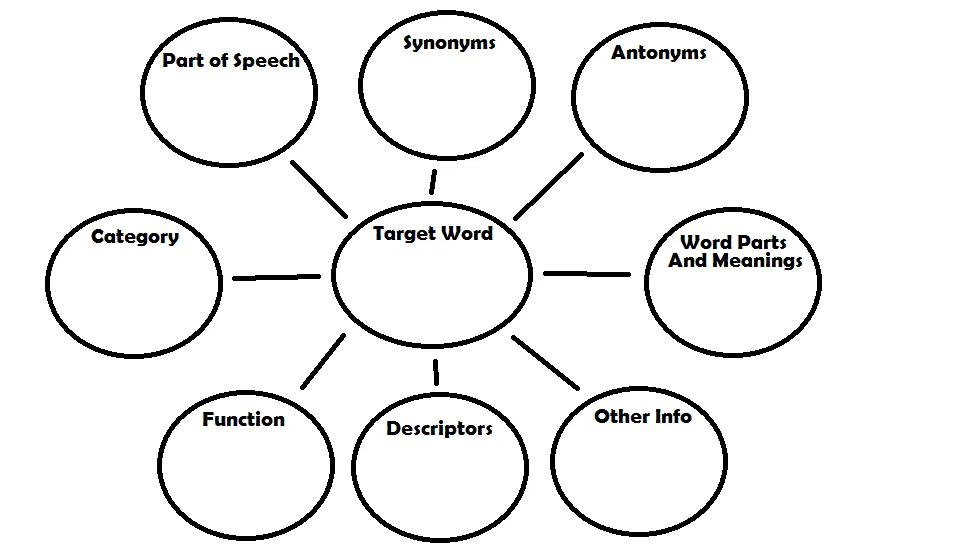
- Part of speech
- Synonyms
- Antonyms
- Word parts and meanings
- Category
- Function
- Descriptors
- Other info
Recommended reading
Books about dyslexia
Some books worth your time, grouped by who they are written for. Your local library can usually order in anything it does not hold.
Parents
- This is Dyslexia, by Kate Griggs
- Dyslexia: A Complete Guide for Parents and Those Who Help Them, by Gavin Reid
Children and young people
- Dyslexia and Me, by Amy Rainbow
- I Am Dyslexic, by Chanelle Moriah
Teachers and educators
- Teaching Dyslexic Students: Theory and Practice, British Dyslexia Association
- The Dyslexia-Friendly Teacher's Toolkit: Strategies for Teaching Students 3-18, by Barbara Pavey, Margaret Meehan and Sarah Davis
- All About Dyslexia: A Practical Guide for Secondary Teachers, by Louise Selby
- All About Dyslexia: A Practical Guide for Primary Teachers, by Louise Selby
Adults
- Dyslexia Unlocked: How to be Successful in Work and Life, by Natalie Brooks
- Study Skills for Students with Dyslexia: Support for Specific Learning Differences (SpLDs), by Sandra Hargreaves and Jamie Crabb
What interventions work for literacy difficulties?
Brooks's What Works for Literacy Difficulties? began as the review of intervention evidence by Greg Brooks, Emeritus Professor of Education at the University of Sheffield and a member of the expert advisory panel on dyslexia. The 6th edition (2020), edited by Dr Gary Lavan and Professor Joel Talcott, continues that comprehensive review.
The Education Endowment Foundation also has useful resources and toolkits to promote evidence-based approaches to teaching and learning.
 What Works for Literacy Difficulties (PDF)Lavan & Talcott (eds), 6th edition 2020
 Education Endowment FoundationEvidence-based teaching toolkits
 British Dyslexia AssociationAdvice, helpline and resources
 Helen Arkell Dyslexia CharityAssessment and support charity
 International Dyslexia AssociationResearch and fact sheets
 National Literacy TrustUK literacy research and campaigns
 Louise SelbyDyslexia specialist & author
 The Dyslexia-SpLD TrustInformation for parents & schools
- Audiobooks and literacyNational Literacy Trust tips for families
 Whole School SENDFree SEND training and resources for schools
 SEND in the Experts (podcast)Georgina Durrant talks to leading SEND experts
 The SENDcast (podcast)Weekly SEND podcast with Dale Pickles
 SEND Talk (podcast)From SENDIASS Manchester
 The SEND Network PodcastExpert insights for SEND practice